
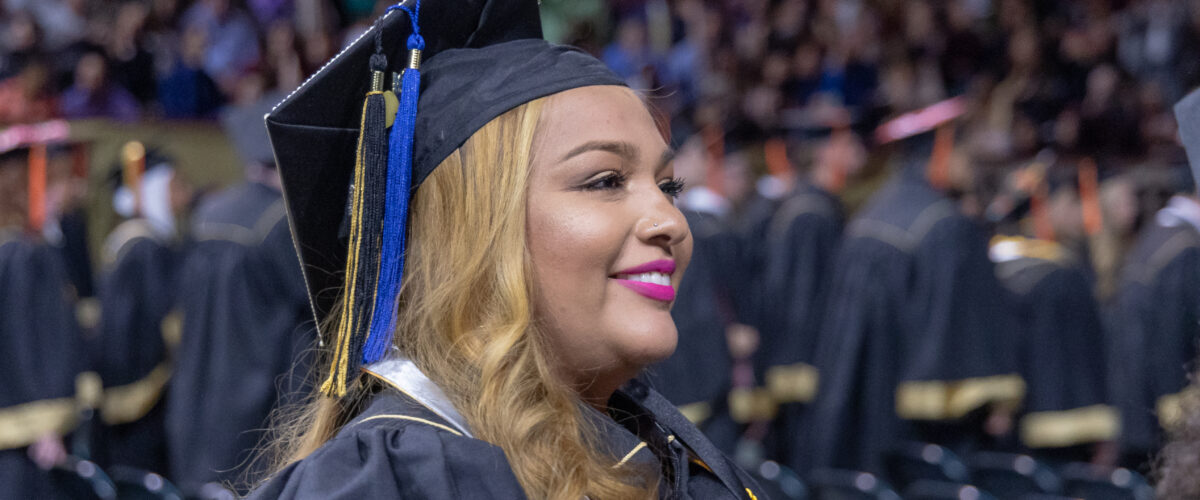

For a generation raised on the promise that education opens doors, the long-held belief that a degree leads to opportunity has started to crack.
Let’s face it. Tuition keeps rising, forcing families to make trade-offs in real time. At the same time, students are watching graduates struggle through lengthy job searches as they navigate hiring processes that stretch for months, and encounter roles labeled “entry level” that still ask for experience they have not yet had the chance to build.
On top of that, applications disappear into digital portals without a reply, internships feel as competitive as full-time positions, and the economy is slowly getting reshaped by technology that seems to move faster than any syllabus. In that environment, the path from classroom to career can feel uncertain and hard to map out.
These factors combined have caused confidence in higher education to decline. In fact, according to National surveys, fewer Americans express strong trust in colleges and universities than they did a decade ago. And as doubt grew, so did interest in alternatives. Opportunities like Bootcamps, short-term credentials, and skills-based programs attract more learners because they promise focused training, lower costs, a quicker transition into the workforce, and allow people to gain practical skills without the hassle of the traditional route.
These trends highlight a deeper tension. A degree used to signal access and suggested that if you finished the work, opportunity would certainly follow. Well, that link feels less predictable today, and many students are asking whether education still translates into meaningful mobility.
This thought now permeates career conversations and enrollment decisions for all types of learners, even those returning to school later in life. Do degrees still matter?
The Confidence Gap
Skepticism did not appear out of nowhere; it reflects measurable shifts in both public sentiment and the labor market structure.
According to Gallup, only 36 percent of Americans say they have “a great deal” or “quite a lot” of confidence in higher education, marking a roughly 20-point drop over the past eight years. That decline coincides with changes in employers’ hiring and training practices. The traditional model in which organizations recruited new graduates and developed them internally has narrowed significantly. Research from the Association of Governing Boards of Universities and Colleges (AGB) reports that the overwhelming majority of hires today are experienced workers, with some estimates placing that figure as high as 95%. Employer-provided training has also declined, leaving fewer entry points for people early in their careers.
It essentially means that new graduates and returning adult learners alike are expected to arrive job-ready. Now, entry-level roles often still require one to three years of experience, yet internships don’t always fully count as transferable experience.
Seen in that light, the doubt surrounding degrees is less about resistance to learning and more about uncertainty over return on investment. People continue to invest time, money, and effort into developing their skills, but they wonder whether the pathway from education to meaningful employment still functions the way it once did.
Beyond the Major
Even as skepticism grows, employers didn’t walk away from degrees. Research from LinkedIn, the World Economic Forum, and McKinsey continues to show that higher education remains a key factor in employers’ readiness assessments. A degree still indicates that someone has committed to a structured learning process, worked through complex material, and developed the discipline to see long-term goals through.
At the same time, expectations have evolved. The World Economic Forum identifies analytical thinking as the most sought-after core skill globally, followed closely by resilience, flexibility, leadership, and social influence. Those qualities aren’t tied to a specific major, but they reflect how well someone can interpret information, collaborate across differences, and adapt when conditions change.
LinkedIn’s workforce research emphasizes this trend. It explains that although degrees are relevant, other factors are now considered in hiring practices, such as adaptability and other skills that can be shown. This means employers want individuals who can apply what they have learned in different situations and who can learn and contribute to group problem-solving. Therefore, the emphasis has shifted away from a perfect alignment between a job title and a field of study toward evidence of capability.
Adaptability as Advantage
Artificial intelligence has added urgency to this conversation, but not in the way many assume. While AI accelerates task automation, it doesn’t and will never replace judgment, ethical reasoning, or the ability to navigate ambiguity. So, as systems handle routine processes more efficiently, employers increasingly rely on people to interpret results, make decisions, set direction, and collaborate across functions.
This shift is already reflected in workforce data. In fact, the World Economic Forum estimates that 39% of key skills required in the job market will change by 2030. Moreover, LinkedIn research suggests that as much as 70% of the skills used in most jobs could evolve within the same timeframe. Simply put, that means technical knowledge alone won’t get you far. What endures is the capacity to learn, adapt, and apply knowledge in new contexts.
That reality is also fueling demand for hybrid skill sets that combine technical fluency with human strengths such as communication and critical thinking. LinkedIn’s Economic Graph points to the rise of skills-based hiring in a changing economy, where employers look beyond titles and focus on what candidates can actually do.
In this context, the differentiator lies in students’ ability to engage intentionally with their degree. Therefore, students who are eager to gain early experience, connect coursework to real problems, seek feedback, and be ready for opportunities are better positioned to make transitions with greater confidence. With the evolution of AI and its impact on the workforce, the advantage will go to those who know how to keep learning.
Building Beyond the Diploma
If the labor market has changed, the way degrees are used must change as well.
It’s now clear that a diploma alone is rarely the differentiator. What carries weight is how students translate their education into experience and momentum. And that skill requires learners to take initiative and institutions to design curricula intentionally.
At CU Denver Business School, management professor and workforce development scholar Traci Sitzmann studies that exact question. From her research and teaching, Sitzmann has found that structured learning matters most when it moves beyond exposure to content and toward application.
“Educational experiences are most effective when they help students become ready for work, not just familiar with course material,” Sitzmann explained. Students grow faster, she notes, when they work through realistic problems, collaborate with others, and receive feedback along the way. Additionally, assignments that require decision making, reflection, and adjustment tend to translate more directly into professional roles because they mirror how work actually unfolds.
Sitzmann also observes that outcomes vary based on how students engage. “Those who take ownership, ask questions, seek feedback early, and intentionally connect what they are learning to contexts beyond the classroom tend to carry those skills into the workplace more easily,” she said. Over time, those habits shape how quickly graduates adapt and continue learning on the job.
That perspective shapes how the Business School approaches readiness. Through experiential learning opportunities, close faculty engagement, industry partnerships, and support from the Business Career Center, students are encouraged to connect coursework to practice long before graduation.
For learners navigating uncertainty, that integration makes a difference. Instead of waiting until the end of a program to considerwork, students challenge and test ideas, build experience, and refine their direction as they go.
So, in an AI-influenced, uncertain labor market, the value of a degree isn’t in guarantees but in its foundation for the future. The real question is: what dream will you build upon?
