

Coffee is one of the few things that needs no introduction. Across cultures, backgrounds, and time zones, it is part of millions of people’s morning routines, it’s the quiet constant that helps them get through long days of work, and the backdrop to conversations that might otherwise never happen. And more often than not, the place where people drink it matters just as much as what is in the cup. The right coffee shop becomes part of a neighborhood’s identity and a place people return to because it gives them something beyond caffeine.
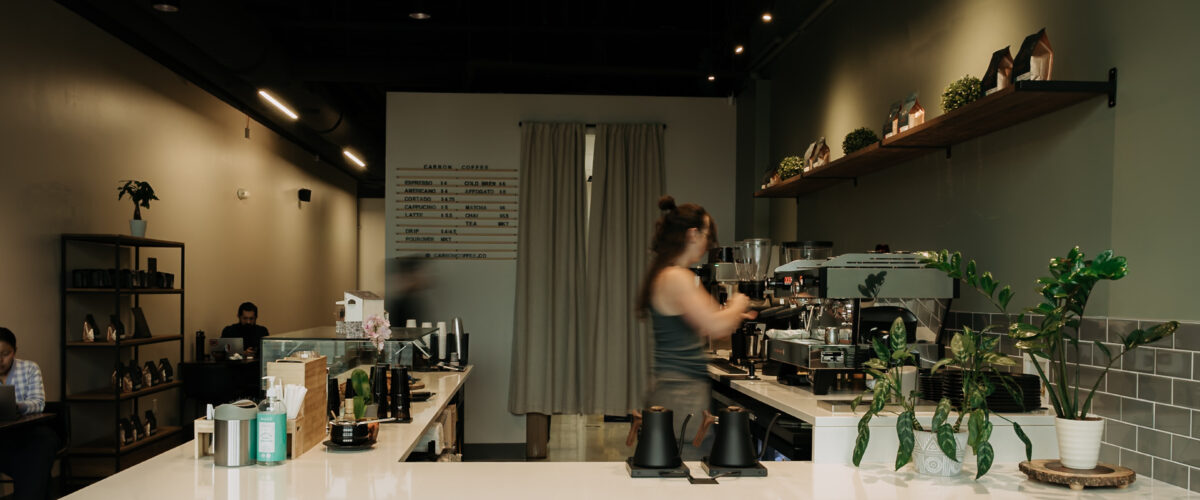
Most coffee shops earn that role gradually by proximity and habit. Benny Panklang ’18 built Carbon Coffee, a local coffee shop with that role already in mind. As you enter the shop, you can see the bar is open, the barista is visible, and the work is on full display: pulled shots whisked in deliberate, unhurried strokes. The rest of the space carries that same vibe with sage-green walls, trailing plants, warm wood, and people settled in with laptops and cups. For Panklang, every element of the shop reflects a philosophy he has carried since long before he ever owned a business: that entrepreneurship, at its best, is something you feel in a place before anyone explains it to you.
That belief, and the journey behind it, is what brought CU Denver Business School to sit down with him. His story is one for students and aspiring entrepreneurs who are still figuring out what kind of business builder they want to be.
Raised by the Community, Shaped by the Work
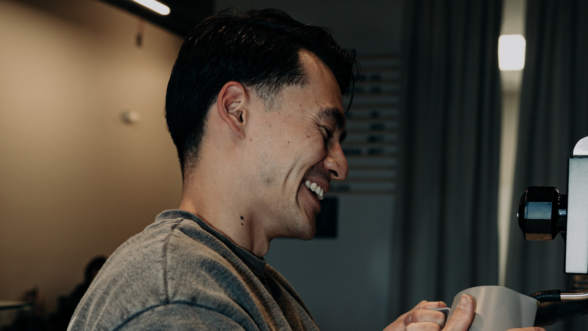
Panklang grew up in Aurora, Colorado, surrounded by a city he describes as entrepreneurial, shaped by diversity, and home to a dense network of local businesses. His immigrant parents were part of that fabric early on, first with a small cigarette store, then a grocery store, and eventually a few restaurants. As he watched them work, Panklang noticed that the products his parents sold brought smiles to people’s faces, which gave him an early, concrete understanding of what business could actually do.
And, when it was time for higher education, CU Denver Business School felt like a natural fit with its urban campus woven into the fabric of the city and connected to the kind of ecosystem he had grown up in. There, he earned a Bachelor of Science in Business Administration with a specialization in Finance and Financial Management Services. While the coursework was rigorous, the capstone course was particularly demanding and deepened his relationship with the subject. As Panklang noted, the professor’s ability to ground abstract financial concepts in real-world application sharpened his curiosity and pushed him to think about business with more precision.
After college, his parents encouraged him to pursue a corporate path and take advantage of the greater stability and reduced uncertainty it offers. That advice came from a lived experience on the hurdles of entrepreneurship. Panklang took this recommendation to heart, but his strong desire to create something of his own has never truly faded. He felt that the entrepreneurial route could give him something more tangible and bring him closer to people. Coffee, as he would eventually come to see it, sat at the exact intersection of business, craft, and human connection he had been drawn to since childhood.
The Corporate Detour
So, when he graduated, Panklang took on a corporate role at Charles Schwab and worked there for about three years in finance and data analysis. He used this experience to create his own processes and learn to analyze specific metrics. Additionally, working under pressure and responding to market shifts sharpened his decision-making, and the structure of that environment solidified a way of thinking he would carry into everything that came next.
However, what the corporation could not give him was proximity to people and the direct impact he could see and feel. As a result, the pull toward ownership, creativity, and tangible change in people’s daily lives grew harder. He wanted to build something of his own, and when he turned his attention to what that something might be, coffee was the answer.
For Panklang, coffee is a universal language, one of the few things that brings people together every day, regardless of background or culture. That universality, combined with the craftsmanship and ritual surrounding coffee-making, made the industry feel like the right place to build. It sat at the intersection of business, craft, and human connection, the same intersection he had been orienting toward since he first watched his parents serve their community in Aurora.
Hospitality as a Community Act
Panklang built Carbon Coffee around genuine hospitality, thoughtful product sourcing, and cultural storytelling through coffee. Almost two years after the shop opened, that orientation is clearly evident in every detail and guest interaction. The open bar design, for instance, grew out of an intentional desire to remove the barrier between barista and customer. That thoughtful design makes the craft visible and sparks meaningful conversation. Sourcing beans from local farmers, having them roasted at a local shop, and preparing them in front of guests is a process Panklang wants people to witness and appreciate. The menu carries the same intention, drawing on Asian flavors to tell a cultural story through what is in the cup. One example is the Kinako Hojicha, a latte that brings together Hojicha powder, a Japanese green tea roasted over charcoal for a smoky, nutty depth, with toasted soy powder and brown sugar, resulting in a rich, subtly sweet drink that introduces customers to a flavor tradition deeply rooted in Japanese culture.
But Panklang didn’t realize the emotional toll that commitment to hospitality would entail. As he discovered, starting a coffee shop requires a level of emotional intelligence that his corporate finance experience hadn’t demanded. It required relationships, culture, and, most importantly, consistency in every guest interaction.
Growing up as an Asian-American in a close-knit community where people celebrated and supported one another shaped Panklang’s view of what a business owes to its surroundings. Collaboration, for him, takes precedence over competition. Carbon Coffee sources its pastries from Banh & Butter Bakery Cafe (a local Vietnamese- and French-inspired bakery), purchases its beans from a local roaster, and employs a staff mostly made up of Aurora natives. The shop also hosts pop-ups with local food vendors and events that spotlight Asian-owned businesses, generate visibility for everyone involved, and bring new customers into the community. For Panklang, it’s clear that successful businesses draw more people in and benefit the whole ecosystem.
That philosophy extends to his definition of Carbon Coffee’s role in Aurora. Historically, the Aurora and Colfax area has carried a stereotype that Panklang believes his shop is helping to rewrite. He wants guests to walk in and feel like they have discovered a place with real personality and intention, one that reflects the community it belongs to.
When the Spreadsheet Meets the Soul
In Panklang’s case, his finance and data analytics background at Charles Schwab gave him a solid foundation when the romanticized version of entrepreneurship clashed with the realities of daily operations. Early on, he put systems in place to track drink performance, monitor customer preferences, and use those to inform decisions on menu rotation and staffing.
On top of that, his experience in financial modeling helped shape his pricing, cost management, and inventory strategies. However, he’s also honest about what this balance entails. For example, data can tell you what is selling, but it can’t tell you what the texture of the guest preferences are, what the team feels like, or what the room feels like.
The clientele Carbon Coffee attracted also came with its own surprises. Panklang expected a mix of travelers, given the shop’s location. Still, his regulars turned out to be students and medical professionals from the nearby Anschutz campus, a community that has become central to the shop’s daily rhythm and identity.
At this point in his life, Panklang feels an urge to reconnect with the Business School. As he noted, the university shaped the way he thinks about decisions and systems, and he wants to bring that full circle by mentoring students who are considering entrepreneurship as a path. For him, sharing an honest perspective on career pivots and what it actually takes to start something from the ground up is intellectual philanthropy at its core. His biggest fear going into Carbon Coffee was being underprepared, and the advice he now gives students reflects that. “Never wait until you’re ready, or else you’ll be too late,” he said, adding that preparation meets you halfway once you start moving.
As he contemplates his business, Panklang wants to continue building a brand rooted in craft, culture, and collaboration, and, in doing so, reinforce the shop’s role as a community hub. Because one thing is clear to him, the growth of a business and that of a community are the same pursuits. At Carbon Coffee, groundedness and growth are two sides of the same grind.
